Real hospitality skills. Data for robotics.

From skilled hands to movement through a property: data grounded in hotel work for robotics training and evaluation.

Supraway structures human demonstrations, actions and their context. Every on-site collection project starts with an agreed scope, permissions and quality criteria.

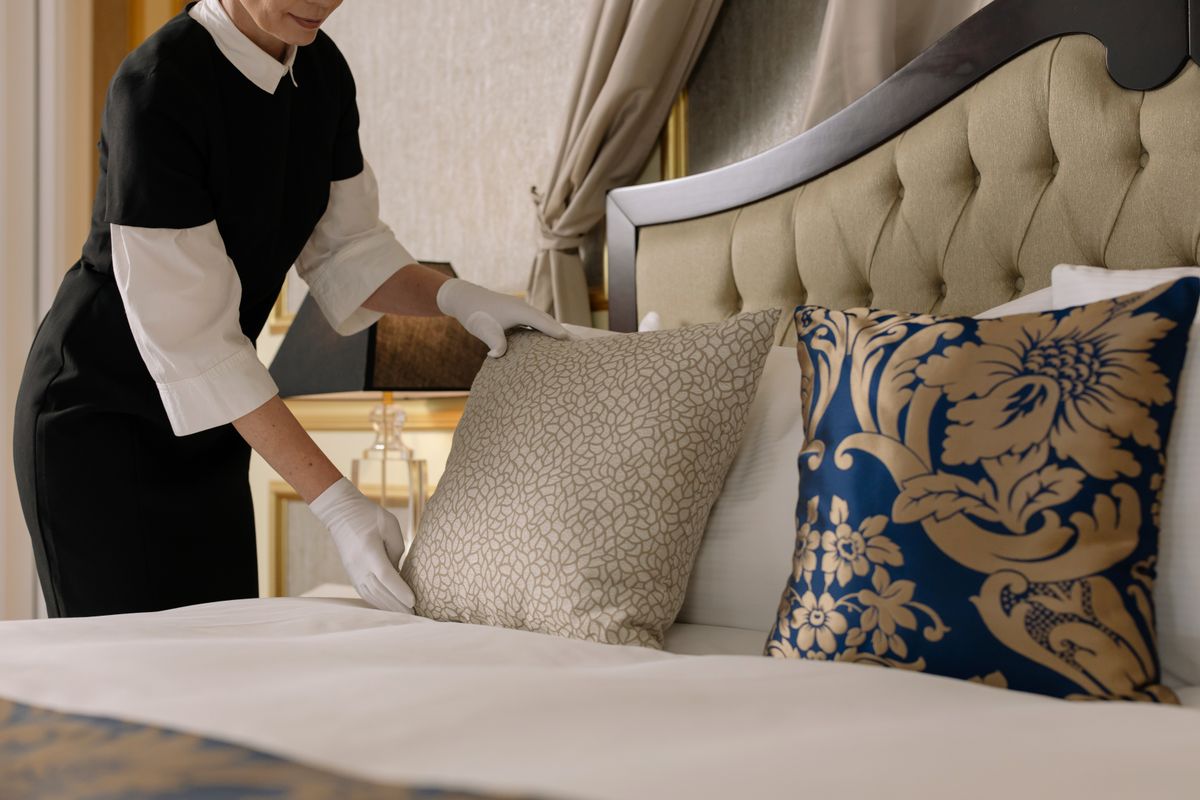
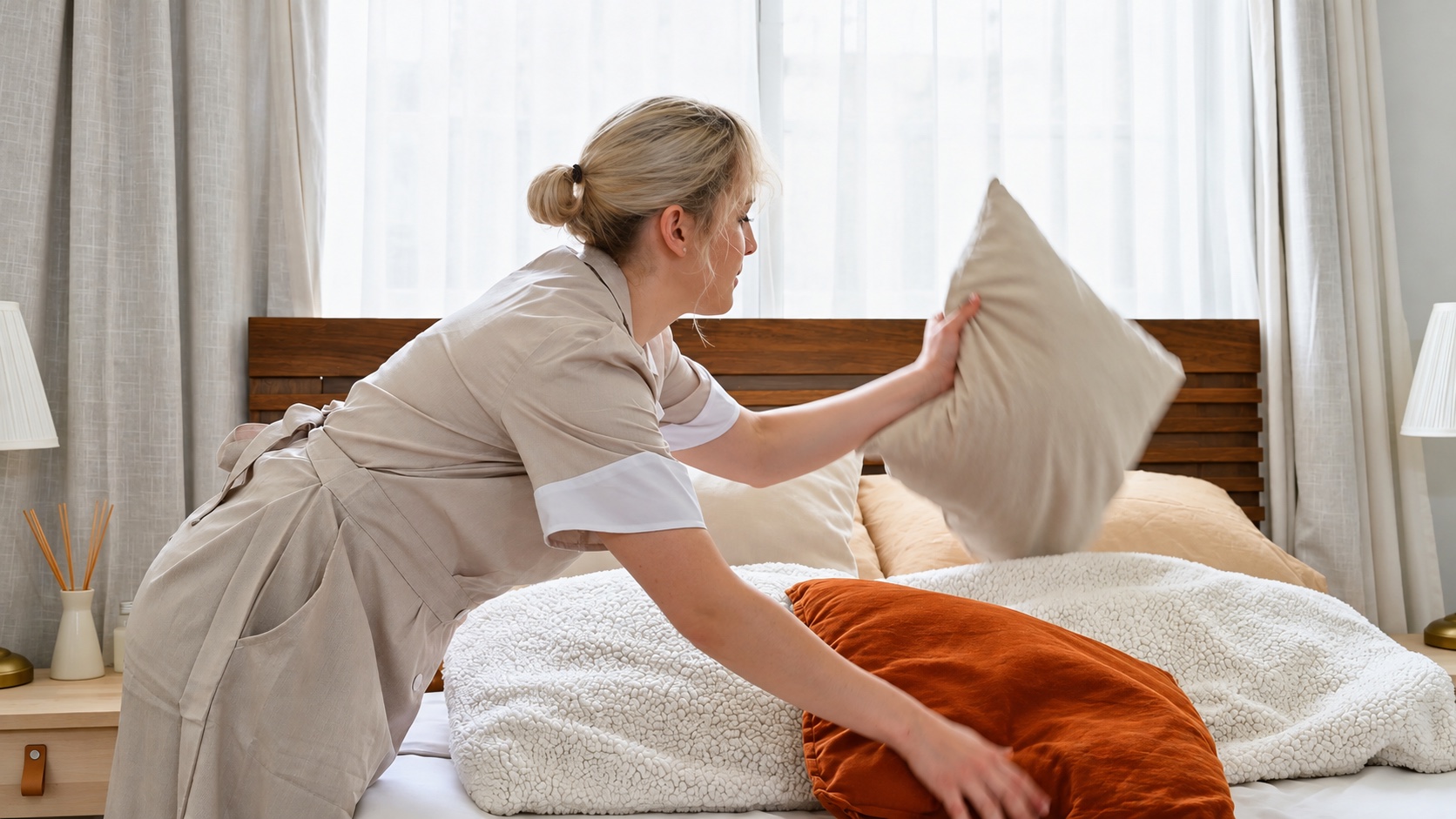
A housekeeper seen from a three-quarter back angle arranging pillows on a bed; retouched illustrative photograph
Capture record
Activity
Housekeeping
Task
Prepare a guest room for arrival
Subtask
Make and dress the bed
Action
Align a decorative pillow
Country
🇺🇸 USA
City
San Francisco
Language
English
Establishment type
Hotel ★★★★
Scene
Guest room · Indoor
Tools / equipment
None visible
Viewpoint
Third-person view
Theresa, 14 years of experience in luxury hospitality — service and hospitality expertise.

Learning to operate in a service environment.

A hotel combines manipulation, movement and human interaction in shared spaces. Preparing a room, putting away linen and bringing a tray to a destination involve different capabilities. Useful data makes the task objective, relevant objects and working conditions explicit.

Context matters alongside the movement: a surface needs to be accessible, the right object selected and steps completed in a coherent order. Understanding what precedes an action and what should follow it connects individual observations to a complete task.

Different trades. Shared industry.

Explore a first selection of roles and task examples. The directory also connects trades that work across industries.

Room preparation & linen

Hotel room attendant

Prepare a guest room, arrange linen and amenities and document the sequence and final presentation.

Example tasks
  • Make and dress a bed in a prepared room.
  • Arrange amenities against a room-preparation checklist.
  • Restock and organize a housekeeping cart.

Room preparation & linen

Laundry and linen operator

Sort, unfold, align and fold professional linen, retaining item identity and the observed final arrangement.

Example tasks
  • Sort linen by agreed item categories.
  • Align and fold a towel or sheet.
  • Stack folded items and prepare a linen cart.

Food preparation & service

Professional cook

Document bounded preparation tasks with ingredient identity, tool use, sequence and an observable completion criterion.

Example tasks
  • Weigh and portion ingredients for a defined preparation.
  • Prepare a consistent cut on an agreed ingredient.
  • Assemble and plate a dish against an agreed reference.

Food preparation & service

Pastry cook

Record precise weighing, shaping and finishing tasks while documenting the preparation state and visible result.

Example tasks
  • Weigh ingredients and prepare an organized work station.
  • Portion and shape a defined dough preparation.
  • Pipe or finish a pastry against a visual reference.

Food preparation & service

Restaurant service professional

Arrange service objects, prepare a setting and document transfers in a prepared area without guests.

Example tasks
  • Set a table against an agreed service layout.
  • Prepare a tray and transfer items to a designated surface.
  • Clear and reorganize a prepared service station.

Food preparation & service

Kitchen steward

Sort, load, unload and put away kitchen equipment, documenting object handling and workstation organization.

Example tasks
  • Sort dishes and utensils before an agreed cleaning cycle.
  • Load and unload a dish rack in a prepared workspace.
  • Inspect and put away cleaned equipment.

Hotel work, task by task.

Choose the activity first. Then define what a useful demonstration must make visible. These examples help scope a collection; they are not a list of datasets already available.

Work areaEveryday tasksWhat the record should show
HousekeepingMake a bed, clean a basin, place amenities and restock a cart.Tool use, contact with surfaces and the order of each step.
Laundry & linenSort, unfold, align, fold and stack towels or sheets.Two-hand coordination, changing fabric shape and the final arrangement.
Food & beverageSet a table, clear dishes, wipe surfaces and arrange cutlery.Object orientation, transfers and placement relative to a table setting.
Kitchen & stewardingWash and put away dishes, organize a station and handle containers.The sequence from a starting state to an organized workspace.
Service transportCarry a tray or move linen between a pickup point and a destination.The route and its interruptions; robot sensing and state data need their own brief.
Guest assistanceAnswer a request, explain a route or hand over to a colleague.The request, response and outcome, under a separate interaction protocol.

Plan for the conditions around the task.

Repeating a gesture is useful when its conditions are documented. Agree the variations that matter for the model and keep them attached to each episode.

What variesExamples to includeContext to keep
Workspace & objectsWorktop height, linen size, storage position and dishware.Scene and object IDs, starting arrangement and destination.
What the camera can seeShadows, reflections, occluded hands and changes in viewpoint.Capture setup, visibility notes and passages needing review.
Service conditionsA prepared room, a cart in the passage or a change of work area.Permitted recording window, task boundaries and interruptions.
A hotel housekeeper positioning a patterned pillow on a bed 01 / HAND CONTACT02 / PILLOW03 / BED SURFACE

A skilled gesture.
A traceable record.

Connect hand contact, the object being handled and its placement to the same sequence.

ActionsObjectsContext

Illustrative annotation guides, not measured tracking.

Match the model objective to the data.

Human video, a navigation trajectory and a robot demonstration provide different learning signals. Modality, synchronization and annotations should follow the capability being developed.

ObjectiveData to specifyAnnotations & review
Task understandingHuman RGB video, viewpoint and scene context.Steps, episode boundaries, hand actions and observed objects.
Manipulation learningObservations paired with robot actions and states where required by the model.Time alignment, action representation and completion criteria.
Mobile serviceOnboard sensing, localization references and route events.Trajectories, obstacles, transitions and passage conditions.
Guest interactionPermissioned interactions, language and operational context.Intent, responses, human handoff and interaction outcome.
Model evaluationScenarios and episodes reserved for evaluation.Review rubric, observable criteria and separation from training data.

This table describes requirements to scope, rather than an inventory of available sensors or datasets. Supraway’s public example is annotated human RGB video; it does not contain robot motor commands.

Collection starts with permissions and site conditions.

Project scope includes property permission, participation of recorded staff, permitted uses and retention terms. Recording areas and windows are agreed before capture, alongside a stop procedure and a process for unintended recordings.

For task demonstrations, a prepared area without guests, personal belongings or reservation screens reduces unnecessary information exposure. Guest interactions and shared-space scenes require their own collection plan. Review covers footage, metadata and identifiers before delivery.

How Supraway structures hospitality data.

We connect video sequences to the tasks, actions and objects that give them meaning. The specification defines episode boundaries, annotation vocabulary and coverage variations. Uncertain observations remain identifiable in records and documentation.

A pilot can specify source clips, an episode index, timed JSON/CSV annotations, a data card and a review log. Acceptance of the first batch provides a point to refine the protocol before a larger collection. Volume, delivery timing and usage rights are agreed with the buyer.

Inspect a video example and its annotations ↗

Public example: a household excerpt from Toloka HomER v2, under CC BY 4.0, with AI-assisted demonstration annotations; independent validation pending. Hotel collection is scoped as a dedicated project.

Questions from robotics teams.

Can a project start with one specific task?

Yes. A brief can focus on one routine, such as folding and stacking towels. It defines starting conditions, objects, variations and completion criteria before specifying capture.

Which capture setup should we specify?

Viewpoint follows the task: first-person video, a fixed workstation view or complementary views where needed. Depth, motion data and robot action streams are separate requirements to confirm in the brief; they are not included in the basic RGB example.

How should variation across properties be handled?

Define variations relevant to the model: objects, materials, workstations, layout and lighting. A coverage plan and metadata track recorded conditions, gaps and required re-recording.

How is delivery quality reviewed?

Criteria are agreed before collection: task coverage, visibility, time consistency, identifier review, file validity and annotation status. Robot performance subsequently needs evaluation on the target hardware and in the intended environment.

How can a property or hospitality professional participate?

The partnership path lets you introduce a role, work environment and participation opportunities. Access to a property does not automatically authorize recording. Explore data partnerships ↗

Further reading.

Define the data your model needs.

Share the task, environment and learning objective. Let’s define the recordings, annotations and acceptance criteria together.

For your data project: data@supraway.ai.

Discuss your data project

Photography & annotation guides.

Stock images illustrating hotel work. They do not depict Supraway customers, collection sites or participants.

Still extracted from real footage, with AI-assisted color and lighting retouching. Illustrative image, unrelated to a Supraway customer or collection site.

The header card illustrates a metadata structure for a Hospitality collection brief. Task labels are contextual examples, not a record of a Supraway collection. Country, city, language and establishment rating shown in the card are demonstration values selected for presentation; they are not verified metadata from the source photograph. The tools field describes what is visible. Points and boxes on the transition image are manually placed illustrative guides, not measurements or model outputs.

The linked data example.

The folding video linked in the explorer comes from Toloka HomER v2 under CC BY 4.0. Supraway annotations were prepared with AI assistance; independent validation is pending.