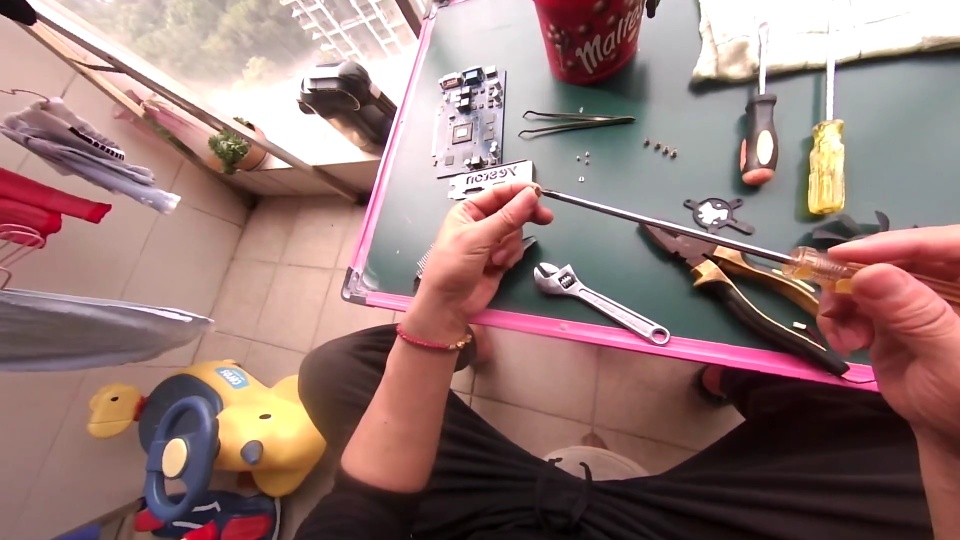
Tool-tip preparation.
Earlier: work at an assembly fastener
Revised: handle a small item at the tool tip. Its identity remains unresolved.
Task-focused video collection, curation and annotation for visual understanding and embodied AI.
WORKED EXAMPLES / VIDEO DATA
Evaluation samples with AI-assisted annotations. Independent expert validation is pending. View quality and review scope.
SYNCHRONIZED SAMPLE EXPLORER
Select a segment to inspect its record.
SOURCE → ACTION → OBJECT → RECORD
Loading…
Source-linked annotation. Model track IDs are not verified anatomical hand identities.
ANNOTATION REVISION / INDUSTRIAL EXAMPLE
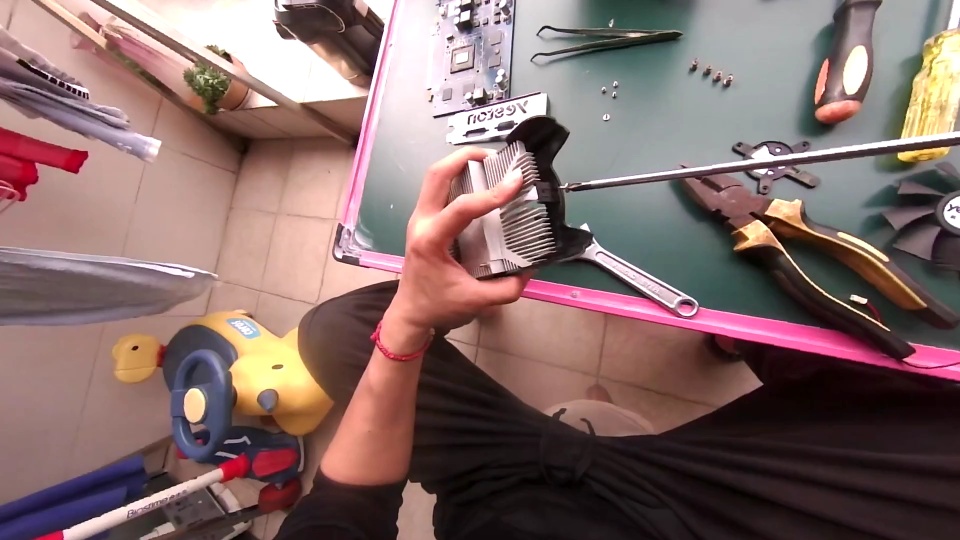
In the industrial example, an AI review revised an early action label after comparing source frames at 22 and 25 seconds. Independent human validation is pending. The small item at the tool tip remains unidentified.

Earlier: work at an assembly fastener
Revised: handle a small item at the tool tip. Its identity remains unresolved.

The assembly is held near the tool. Tightening direction and successful replacement remain unverified.
MEASURED QUALITY
No frame loaded
Points are triangulated from the two views using supplied calibration. Rejected observations remain missing.
The display is centred for inspection. Full camera-frame coordinates are exported in metres.
Internal reprojection checks do not establish physical accuracy. This sample is not qualified as validated full-hand 3D data.
STRUCTURED DELIVERY
Download the three examples, linked annotations and method notes for evaluation.
DELIVERY & ACCEPTANCE
This sample demonstrates a processing and inspection workflow. A customer delivery needs agreed task coverage, annotation rules and measurable acceptance criteria.
Video programs
Start with the task, environment and viewpoint. Agree capture specifications and annotation depth before producing a corpus.
Scope participant demonstrations of everyday or workplace tasks. Define first-person or external viewpoints, scene coverage, task variations and authorized recording conditions.
Task brief · Capture protocol · Participant permissionsPrepare footage you are authorized to provide, or explore licensed archives. Select relevant clips and add temporal action segments, object labels and task context under an agreed schema.
Corpus selection · Temporal labels · Human reviewScope a license for a defined video corpus with documented source history, annotations and permitted uses. Corpus availability, coverage and distribution rights are confirmed for each project.
Corpus scope · Delivery specification · Usage licenseThese are scoped offers. Capture capacity, equipment, environments, available footage and delivery timelines are confirmed during pilot design.
CAPTURE SETUPS
Our starting point is single-camera smartphone video. The task defines the viewpoint, recording conditions and annotation layers.
Discuss your capture requirementsA method built for visual evidence
Keep the connection between the video, the action and the evidence used to review each annotation.
Define tasks, viewpoints, recording duration, frame rate, resolution and scene conditions. Include participant and source permissions in the collection brief.
Review visibility, task relevance and clip boundaries. Record exclusions and preserve links between clips and their source footage.
Label action intervals, relevant objects and task context. Additional layers such as hand keypoints are scoped separately, with estimated labels identified as such.
Agree human review, coverage and acceptance criteria. Deliver the media, linked annotations and documented limitations in the required format.
What a client receives
Specify the product as media plus annotation layers and documentation, ready for the intended training or evaluation workflow.
Clips in the agreed format, with source identifiers, recording specifications and capture context.
Time-linked action labels, object references and task metadata in formats such as JSON or CSV.
Review status, coverage notes, source history, privacy treatment and the scope of the usage license.
Use cases may include action recognition, visual task understanding and embodied-AI training or evaluation. Video alone does not establish robot actions, calibrated 3D trajectories or verified task success.